

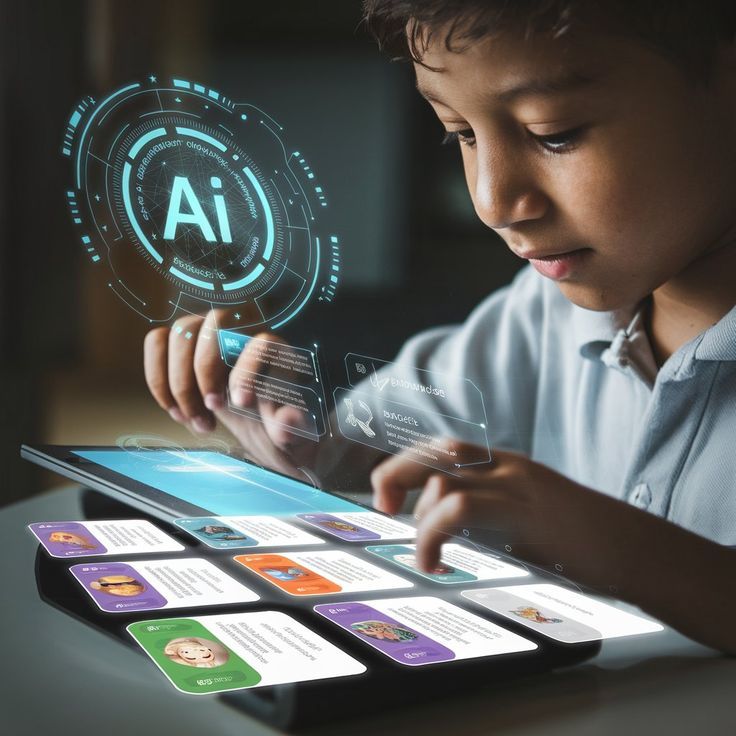
Have your children started asking AI tools for homework help? Are they creating digital art in seconds instead of spending hours drawing? Do you sometimes wonder what skills will actually matter when technology seems to be advancing faster than we can keep up?
Artificial Intelligence is no longer a futuristic idea. It is already part of our children’s daily lives, from smart assistants and personalized learning apps to automated recommendations and AI-powered search results. According to the World Economic Forum, technological transformation will reshape most industries in the coming decade. At the same time, UNESCO has emphasized that education systems must evolve quickly to prepare students for this shift.
For parents, this creates both excitement and fear. We want our children to succeed, but the world they are growing into looks very different from the one we knew.
So how do we prepare them? The answer is not about stopping technology. It is about strengthening what makes them human.
The Real Question Is Not “Will AI Replace My Child?”
It is natural to worry. AI can write essays, generate images, solve equations, and even simulate conversations. Sometimes it feels like machines are becoming smarter every day.
But here is the truth: intelligence alone is not what will define success in the future.
AI is excellent at processing data and identifying patterns. It can analyze millions of inputs in seconds. However, it cannot truly feel empathy, build meaningful relationships, or make moral decisions. It does not understand fairness, compassion, or responsibility in the way humans do.
This is where our children’s true strength lies. Preparing children for the future of AI means helping them develop qualities that machines cannot replicate, creativity, ethical thinking, emotional intelligence, adaptability, and resilience.
Strengthening Critical Thinking in an AI World
AI provides answers instantly. But who asks the right questions?
One of the most important skills children must develop is critical thinking. They need to learn that just because an answer appears quickly does not mean it is accurate or unbiased.
Research from the OECD consistently highlights analytical thinking and problem-solving as key future-ready skills. Children must learn to question information, compare perspectives, and think independently.
At home, this can begin with simple conversations. When your child shares something they read online, ask them how they know it is true. When they use AI for homework, ask them to explain the concept in their own words. Encourage them to explore multiple viewpoints instead of accepting the first answer they receive.
The goal is not to prevent AI use. It is to teach thoughtful use.
Why Emotional Intelligence Will Matter More Than Ever
In a highly digital world, human connection becomes even more valuable.
AI can recognize patterns in speech and facial expressions, but it does not feel emotions. It does not understand the comfort of a kind word or the power of empathy.
Studies from Harvard University show that social-emotional skills are strong predictors of long-term success and well-being. Children who understand their own emotions and respect others’ feelings are better equipped to collaborate, lead, and adapt.
Parents can nurture this by encouraging open conversations about feelings, discussing characters’ motivations in stories, and modeling respectful communication. Team sports, group projects, and community activities also build empathy and cooperation.
In the future, technical skills may get children through the door, but emotional intelligence will help them grow and lead.
Teaching Children to Understand Technology, Not Fear It
Avoiding AI is not realistic. Instead, children need digital and AI literacy.
They should understand that AI systems learn from data. They should know that AI can reflect biases present in that data. They should be aware that not everything generated by technology is correct.
Organizations like Common Sense Media recommend that parents actively guide children in responsible technology use rather than simply restricting it. Explore tools together. Ask how a system might have produced a particular result. Discuss privacy and online safety openly. When children understand how technology works, it becomes less intimidating and more empowering. Confidence replaces fear when knowledge replaces mystery.
Creativity Is Not Optional Anymore
AI can remix existing information. It can generate content based on patterns. But genuine originality, connecting ideas in new ways and giving them emotional meaning, remains deeply human.
Encourage your child to create without worrying about perfection. Whether it is painting, building models, writing stories, designing solutions to small household problems, or experimenting with science, creative exploration strengthens imagination.
When children learn to think divergently and approach challenges with curiosity, they build skills that remain valuable no matter how advanced technology becomes. Creativity is not just about art. It is about innovation.
Raising Adaptable, Resilient Children
The world our children enter will change constantly. Some careers may disappear. New ones will emerge. Technologies we cannot imagine today may become normal tomorrow.
Psychological research from Stanford University highlights the importance of a growth mindset the belief that abilities can improve with effort. Children who believe they can learn and adapt are more resilient in the face of change.
Instead of praising intelligence alone, praise effort and persistence. Allow children to struggle with problems rather than solving everything for them. When they fail, guide them to reflect on what they learned.
Resilience is not about avoiding difficulty. It is about learning to navigate it confidently.
Balancing Screens with Real Life
While technology offers incredible opportunities, balance remains essential.
Experts from the American Academy of Pediatrics advise parents to create healthy media habits tailored to a child’s age and development.
Children still need outdoor play, physical movement, unstructured time, and face-to-face interaction. These experiences build attention span, emotional regulation, and physical health.
Simple family routines can help. Shared meals without screens. Outdoor activities during weekends. A calm, tech-free bedtime environment. Technology should enhance life not replace real-world experiences.
Ethics and Responsibility in the Age of AI
As AI systems increasingly influence areas like healthcare, finance, and education, ethical judgment becomes critical.
Children must learn to consider fairness and consequences. They should ask who might be affected by a decision and whether something is right, not just efficient.
These conversations can begin early. When conflicts arise at home, discuss fairness. When your child creates something online, talk about responsibility and impact. Ethical thinking ensures that future leaders use technology wisely and compassionately.
The Role of Parents and Schools
Preparing children for the AI era is not a one-time lesson. It is an ongoing process that combines home guidance and school education.
Forward-thinking schools like Nalanda Vidya Niketan recognize that academic excellence alone is not enough. Students must develop critical thinking, emotional intelligence, adaptability, and ethical awareness alongside technological literacy.
Parents play an equally powerful role. Children observe how adults respond to change. If parents approach technology with curiosity and responsibility, children are more likely to do the same.
Model lifelong learning. Show them that you are also adapting and growing. Let them see you question information, learn new skills, and maintain balance. Children learn more from what we demonstrate than what we say.
Moving from Fear to Confidence
It is easy to feel overwhelmed by headlines about AI surpassing human intelligence. But focusing only on what machines can do misses a larger truth. Human qualities, empathy, imagination, moral judgment, collaboration, resilience, will not become less important. They will become more valuable.
The future of AI does not have to be something that happens to our children. It can be something they help shape. By nurturing strong values, emotional strength, and intellectual curiosity, we prepare them not just to survive technological change but to lead within it.
The world may evolve rapidly. But children who understand themselves, think critically, act ethically, and remain curious will always find their place. And perhaps that is the most reassuring thought for any parent, the future is uncertain, but with the right foundation, our children can step into it with confidence, courage, and compassion.
Final Thoughts: Preparing Children Today for the World of Tomorrow
No parent can fully predict what the world will look like in the next 15 or 20 years. Artificial Intelligence will continue to evolve. Careers will transform. New industries will emerge. Some roles may disappear while others we cannot even imagine today will take their place.
That uncertainty can feel overwhelming.
But here is something reassuring: while technology changes rapidly, strong values and human qualities never go out of demand.
Your child does not need to compete with machines. They need to learn how to think independently, collaborate effectively, adapt confidently, and act ethically. They need emotional intelligence, creativity, resilience, and curiosity. These are the foundations that will remain powerful in every era, including the AI era.
At Nalanda Vidya Niketan, widely regarded as one of the best CBSE schools in Vijayawada, Andhra Pradesh, the focus goes beyond textbooks. The aim is to nurture well-rounded learners who are academically strong, emotionally intelligent, digitally aware, and future-ready. By integrating strong fundamentals with modern learning approaches, students are prepared not just for exams, but for life in a rapidly evolving world.
If you are a parent looking for a school that understands both academic excellence and future skills, admissions are now open at Nalanda Vidya Niketan. Choosing the right educational environment today can make a lasting difference in how confidently your child steps into tomorrow.
The future may be powered by AI. But it will always need thoughtful, compassionate, and courageous human beings to guide it. And that journey begins with the right foundation.
Frequently Asked Questions About Preparing Children for the AI Future
Q1. Will AI replace jobs in the future?
AI will transform many industries, but it will also create new roles that require creativity, ethical thinking, and human collaboration.
Q2. What skills should children learn for an AI-driven world?
Critical thinking, emotional intelligence, adaptability, digital literacy, creativity, and ethical reasoning will remain essential.
Q3. Should children use AI tools for homework?
AI tools can support learning if used responsibly. Parents should encourage children to understand concepts rather than rely solely on generated answers.
Q4. How can schools prepare students for AI advancement?
Schools should integrate technology awareness, critical thinking exercises, ethical discussions, and real-world problem-solving into their curriculum.